
Normally Open Thermostats: Close-on-Rise and Close-on-Fall Disc Switches
A normally open thermostat keeps its contacts apart until the sensed temperature reaches its set point, then snaps them closed. Built to close on a rise, it switches on a cooling fan or an alarm as things heat up. Built to close on a fall, it switches on a heater or a defrost circuit as things cool down.
"Normally open" only describes the resting state of the contacts. It says nothing about which way the temperature has to move, and that is where most specification mistakes start. A close-on-rise part and a close-on-fall part are both normally open, but they do opposite jobs: one waits for heat, the other waits for cold.
This guide covers the four contact and direction combinations, what close-on-rise and close-on-fall mean in practice, where each is used, and how to specify one. It is written for product engineers and sourcing managers who need the right contact form, not a generic on/off switch.
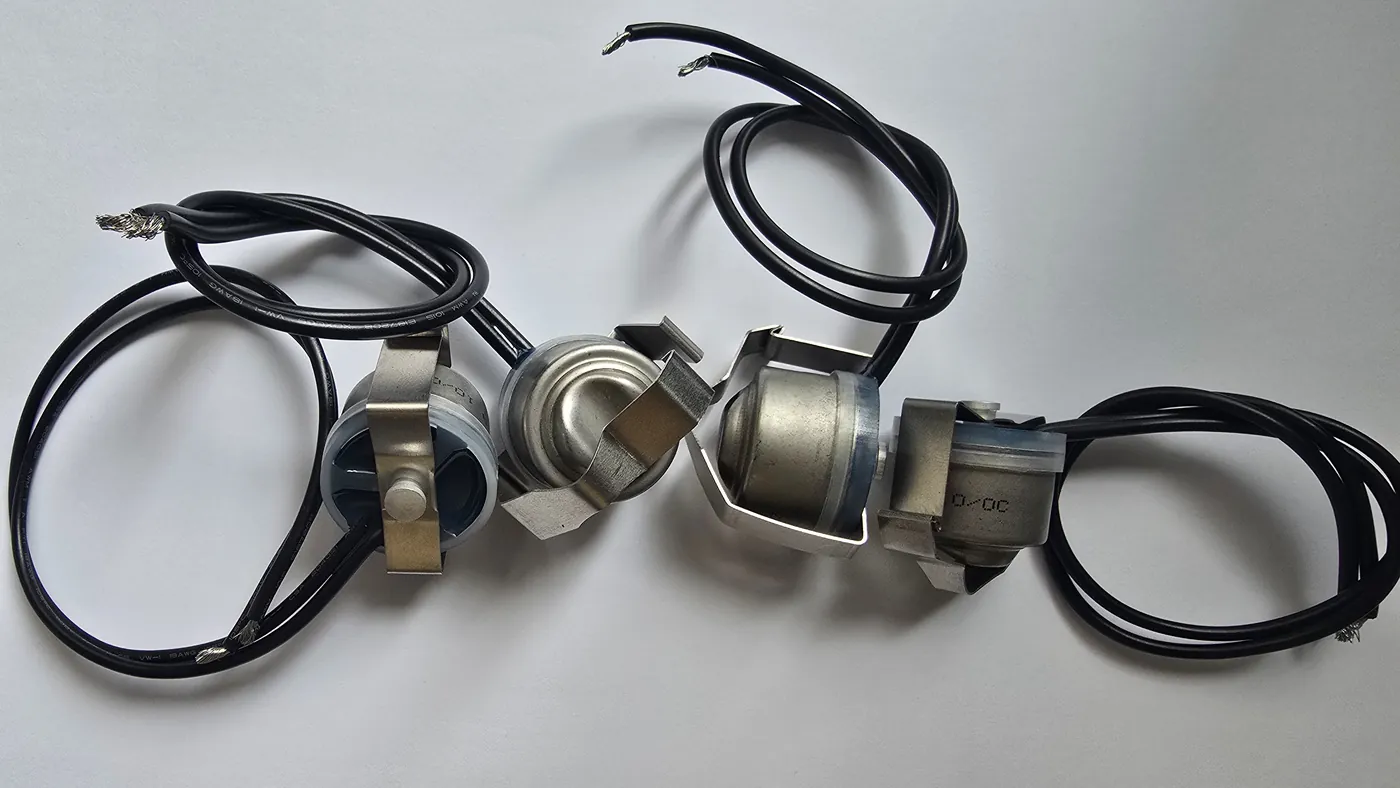
What is a normally open thermostat?
It is a temperature switch whose contacts are open at its resting temperature and close when the part reaches a calibrated point. In a bimetal version, the snap-action disc pushes the contacts together when it flips. Whether heating or cooling flips it is set at the factory: the same disc family is built close-on-rise or close-on-fall. Once the temperature moves back past the set point by the reset differential, the disc snaps back and the contacts open again. For the underlying mechanism, see how a snap-action disc actually flips.
Normally open vs normally closed: what are the four combinations?
Two choices define the part: the resting state of the contacts (open or closed) and the direction that trips it (a rise or a fall in temperature). That gives four builds, and each has its own job.
| Acts on a temperature rise | Acts on a temperature fall | |
|---|---|---|
| Normally open (NO) | Closes when hot: starts a cooling fan, lights an over-temperature alarm | Closes when cold: switches on a freeze-protection heater, starts defrost |
| Normally closed (NC) | Opens when hot: the common heating control and over-temperature cut-off | Opens when cold: stops a pump, fan or compressor below a safe temperature |
Get the pair wrong and the part works backwards. A close-on-fall part fitted where a close-on-rise fan switch was meant to go will run the fan only when the equipment is cold.
What does "close on temperature rise" mean?
It means the switch waits for heat. Picture a fan thermostat on a motor housing set to close at 50 °C. Below that, the contacts stay open and the fan is off. When the housing reaches 50 °C, the disc snaps closed and starts the fan. As the housing cools, the disc reopens at the reset point, so the fan runs only while it is needed. Our compact KSD9700 thermal protector in a normally open, close-on-rise build is made for this fan and alarm duty.
What does "close on temperature fall" mean?
It means the switch waits for the cold. Picture a freeze stat set to close at 0 °C. Above that, the contacts stay open and nothing happens. When the sensed temperature drops to 0 °C, the disc snaps closed and energises whatever it controls - a trace heater, a damper, an alarm. As the space warms back up, the disc reopens near 10 °C, giving a 10 °C reset differential that stops the contacts chattering around the set point.
Where are normally open thermostats used?
Close-on-rise parts go wherever heat should start something:
- Cooling fans - in ovens, fryers, motor housings and power supplies, switched on only above a set temperature.
- Over-temperature alarms and indicator lamps - a warning circuit that closes before the cut-out has to open.
Close-on-fall parts go wherever cold should start something:
- Freeze protection - switch on a trace heater or lamp before pipes, tanks or condensate lines freeze.
- Defrost initiation - close a defrost circuit when an evaporator or coil drops below freezing.
- Refrigeration and cold rooms - low-temperature control and cold-side safety.
- Cold-start and warm-up - enable a heater or interlock only while equipment is below its operating temperature.
- Outdoor and cold-climate equipment - greenhouses, RV and marine systems, telecom cabinets.
In a refrigerator, the defrost thermostat is one of three temperature parts that are usually sourced together. A capillary thermostat in the fresh-food compartment or the freezer starts and stops the compressor, while electronic models replace the dial with NTC probes in each compartment and on the evaporator. See how capillary thermostats control refrigerators and freezers, and which NTC probes go into refrigerator compartments.
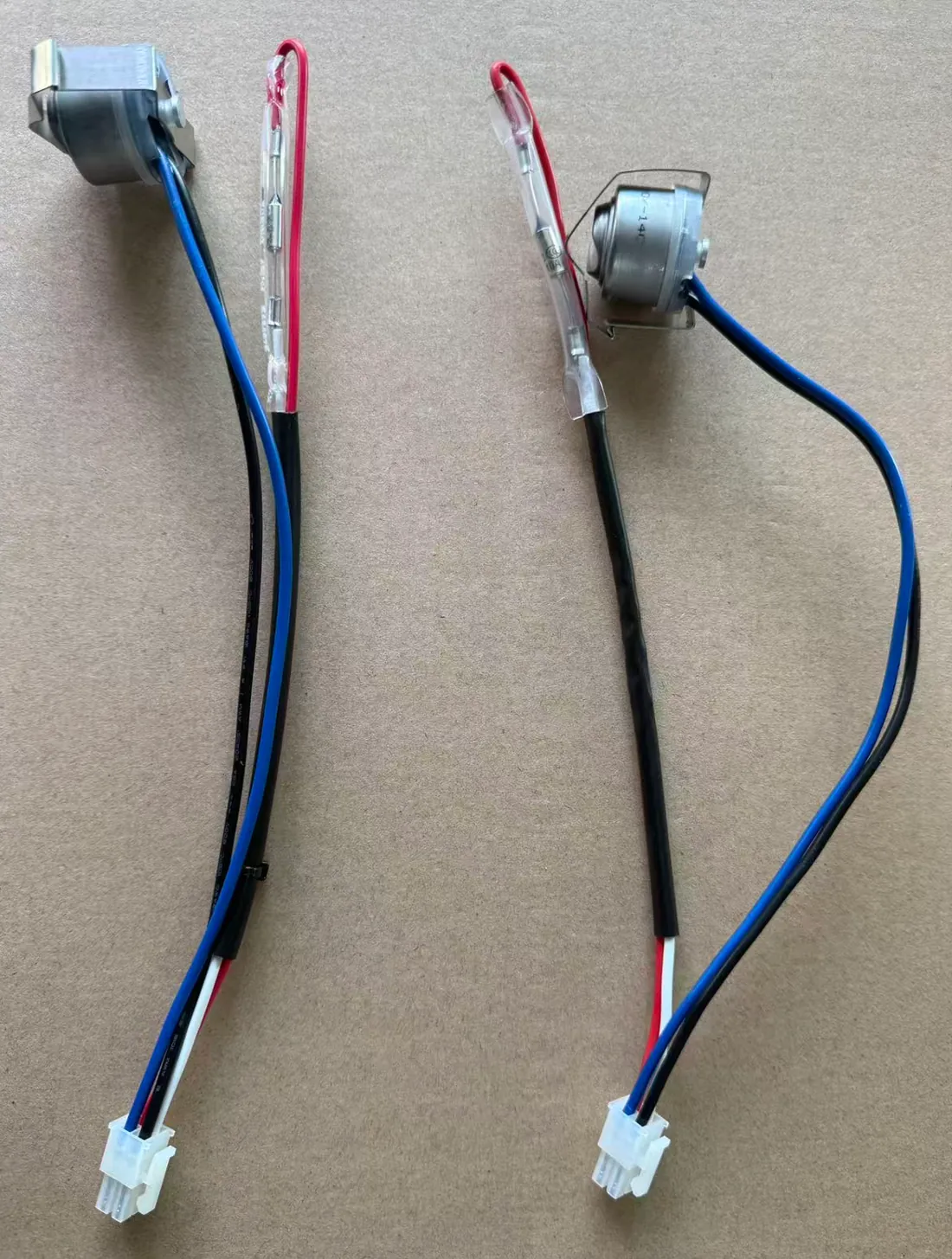
How do you specify a normally open freeze thermostat?
Five things pin down the part. The close temperature is the set point it snaps shut at, for example 0 °C. The reset differential is how far it has to warm to reopen, typically around 10 °C. The contact rating must match your load. The housing matters, with stainless steel preferred for damp or cold-condensation environments. And the termination is built to your circuit, since the disc body is fixed but leads, faston tabs or screw terminals are made to order.
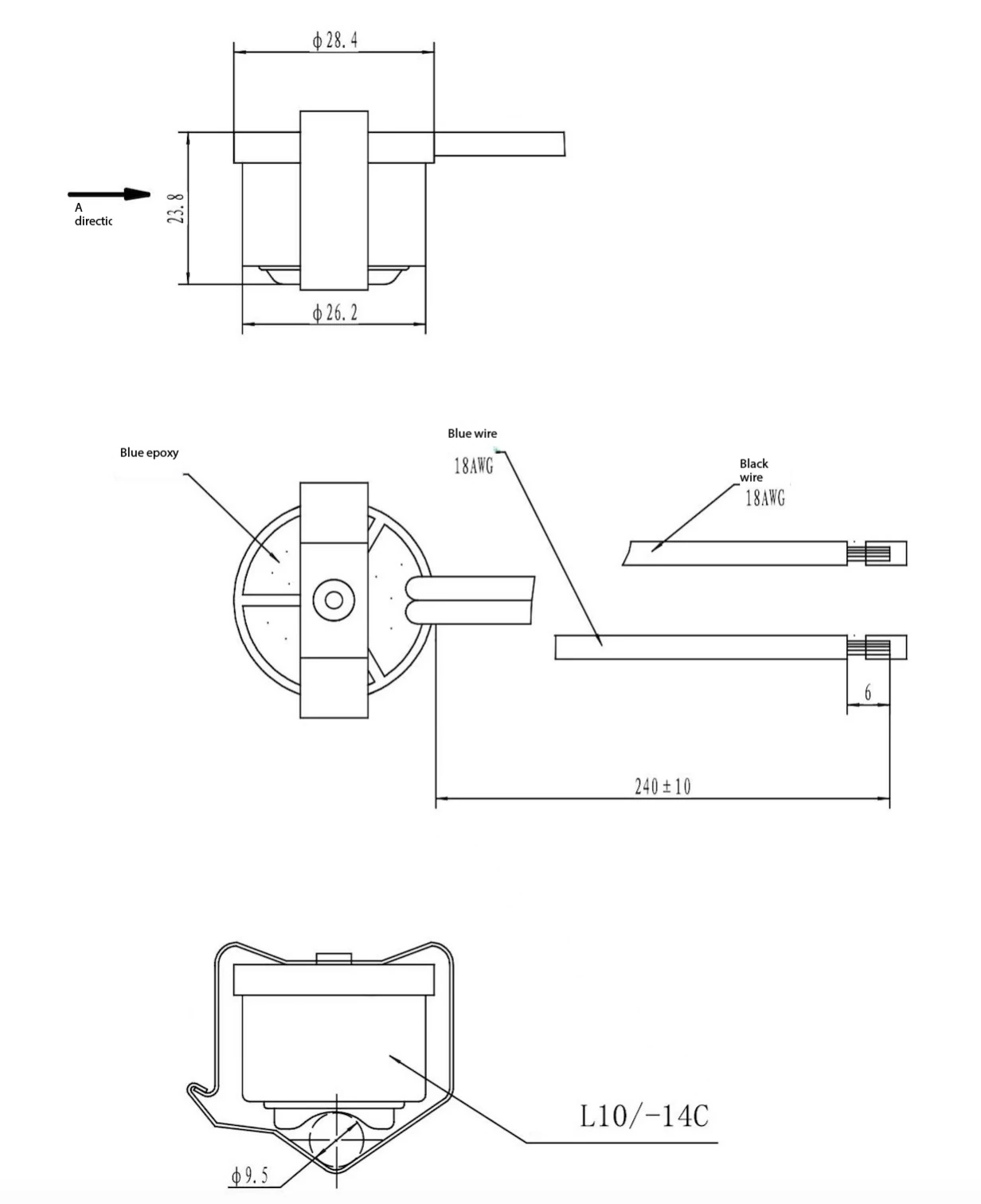
Representative ratings for our normally open disc thermostats: temperature tolerance around ±5 °C, reset differential about 10 °C, contacts up to 250 V, stainless-steel housing, and roughly 100,000 switching cycles. Exact figures are set per model, so confirm them for your set point when you request a drawing. To source one, start with our bimetal disc thermostat range, available in normally open close-on-fall configurations.
Frequently asked questions
Q: Do you have a thermostat that is normally open and closes when it gets cold? A: Yes. We build bimetal disc thermostats in a normally open, close-on-fall configuration: the contacts stay open while warm and snap closed at the set point you specify, for example 0 °C, then reopen once it warms past the reset differential.
Q: Is a freeze stat the same as a normally open thermostat? A: A freeze stat is one common use of a normally open, close-on-fall thermostat. It closes a circuit, usually a heater, when temperature drops toward freezing, then opens again on warm-up. Any low-temperature "close on cooling" job uses the same NO disc.
Q: What is the reset differential on a close-on-fall thermostat? A: It is the gap between the close temperature and the reopen temperature. A part that closes at 0 °C and reopens near 10 °C has a 10 °C differential. The gap prevents the contacts from chattering when temperature sits near the set point.
Q: Can the same disc be made normally closed instead? A: The two are different builds of the same snap-action disc family, calibrated to trip on cooling or on heating. Tell us the resting state and the trip direction you need, and we match the disc to it. See the plain-English guide to how these switches work.
Where to go from here
- Bimetal disc thermostats - normally open or normally closed, close-on-fall or open-on-rise, made to your set point and termination.
- How a snap-action thermostat works - the disc mechanics behind both trip directions.
- What is a thermostat switch? - the full family, if you are starting further back.
And if you want to talk a specific set point through with an engineer, our contact page goes directly to the right people.